Service 10 · Post-loss drying verification and documented readings
Moisture & Tap Monitoring
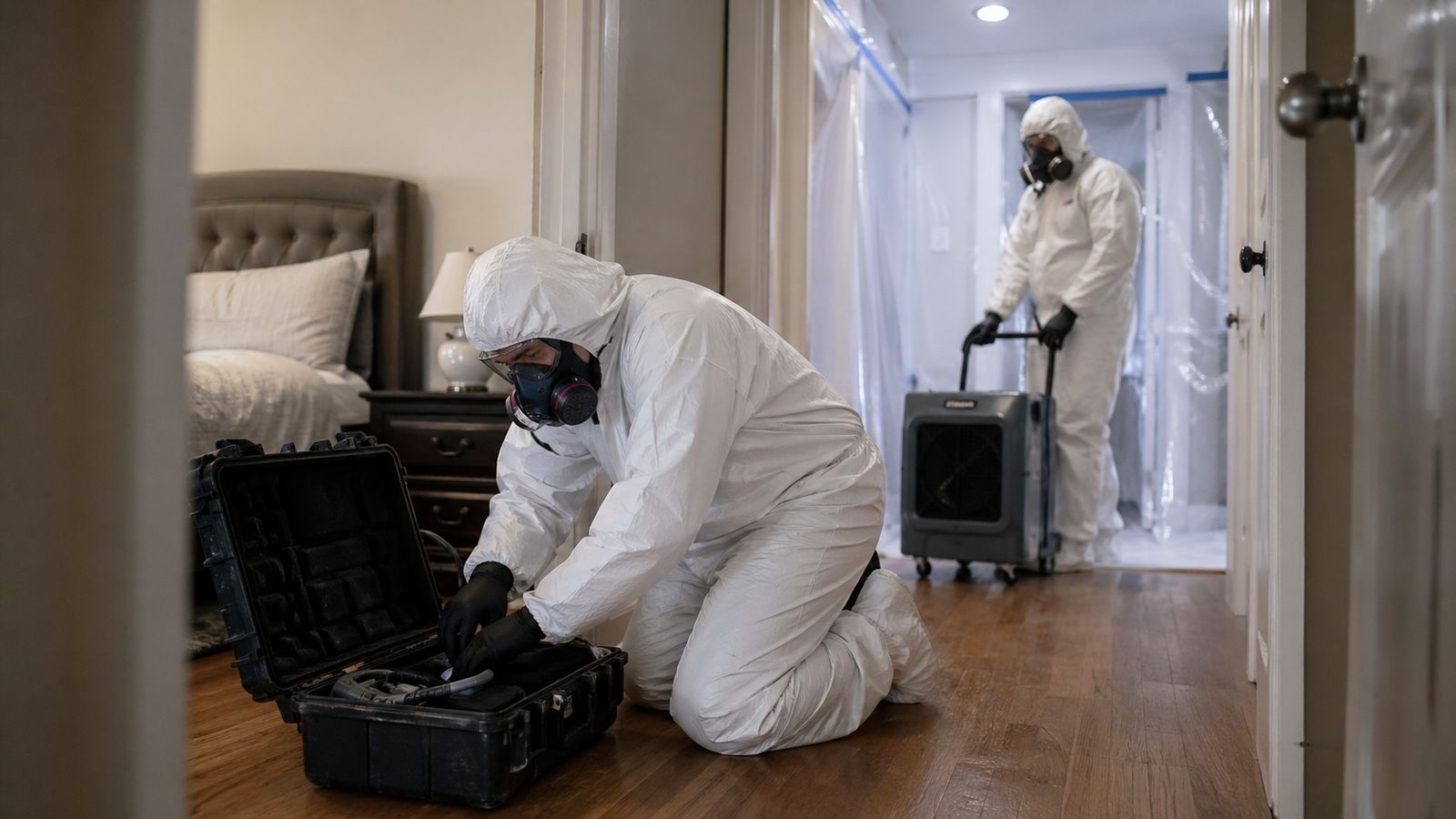
Drying equipment running is not the same as a structure being dry. Monitoring is the part that produces the evidence, and the part carriers actually read.
Licensed & certified
Summary
Water is a damaging element, and the outcome of a water loss is decided in the first days. If a structure stays wet too long, wood warps, drywall disintegrates and electrical parts short out. It is advantageous to begin drying within 24 hours to prevent the growth of mould and other contaminants.
Monitoring is what turns that from an intention into a record. We take instrument readings across the affected structure on a daily schedule, log them against a target dry standard drawn from unaffected material in the same building, and stop when the readings hold, not when the equipment has been out for a convenient number of days.
What the work covers
Baseline dry standard
Readings from unaffected material of the same type in the same building, so the target reflects your structure rather than a textbook figure.
Daily instrument readings
Penetrating and non-penetrating moisture meters, thermo-hygrometers and thermal imaging across every affected assembly.
Equipment adjustment
Dehumidifiers and air movers repositioned as the profile changes, rather than set once and left.
Cavity and subfloor verification
Wall cavities, subfloor and insulation checked directly, since these hold water long after the surface reads dry.
Documentation package
Daily logs, equipment records, photographs and a completion statement in the format adjusters expect.
How the job runs
- 01Set the targetBaseline readings taken from unaffected material to establish the dry standard for this specific building.
- 02Map the affected areaEvery wet assembly identified and recorded, including areas the visible damage does not extend to.
- 03Place equipmentDehumidification and air movement sized to the affected volume and class of loss.
- 04Read dailySame points, same instruments, same time of day, logged.
- 05AdjustEquipment moved or added where readings are not tracking down as expected.
- 06Close outReadings hold at the dry standard, equipment comes out, and you receive the full log.
Typically included
- Baseline dry standard from unaffected material
- Daily moisture and humidity readings
- Thermal imaging of affected assemblies
- Cavity and subfloor verification
- Equipment repositioning through the drying period
- Photographic record
- Daily logs in carrier-ready format
- Written completion statement
On cost
Monitoring is usually part of a water loss claim rather than a separate purchase, and the log is what supports the rest of the claim. Where a third party (a landlord, a managing agent, a buyer) needs proof the structure is dry, we can be engaged for the monitoring alone.
Out of pocket, most jobs
$0
Most people we work for pay nothing out of pocket.
Most of our services, crime scene cleanup included, are covered by homeowners insurance. Where a crime has been committed, remediation for eligible victims and their families may be covered by the New York State Office of Victim Services. We work with the carrier directly.
The assessment is free and it happens before any work is agreed. You get a written scope, and you get told honestly which route applies, including when the answer is that nothing here is claimable.
After a tragedy you should not be left with the aftermath of a tragedy and a bill. That has been this company's position since it started.
Also handled
Request 10
Tell us
what happened.
A person answers the phone. If it is easier to write it down than say it out loud, use the form. We read every one and reply the same day.
- Telephone
- 631-419-7988
- Fax
- (888) 811-3912
- Head office
- 1863 Pond Road, Suite 4
Ronkonkoma, NY 11779